As part of our work this sprint, we’ve been user testing a new online payment journey for council tax. The payment process itself is provided by our third-party supplier Civica and allows residents to pay for a range of different council services online using a credit or debit card.
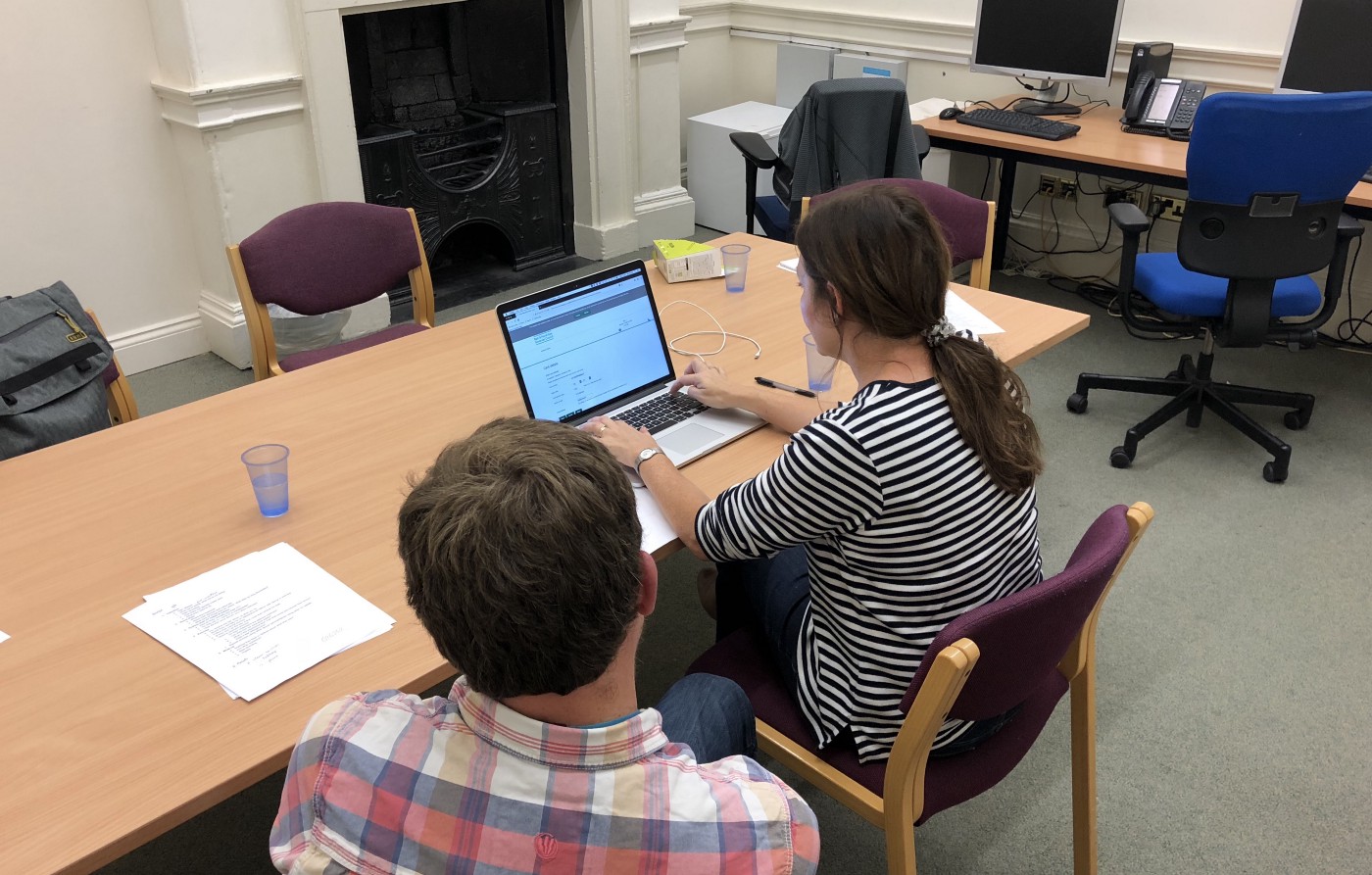
Up until now, we’ve been running pop-up testing in libraries, car parks and council one-stop shops. This kind of guerrilla testing offers a quick and cheap way to get feedback on what we’re designing, and it works well in many situations. However, the payment process is a more involved journey, requiring users to step through a series of forms inputting personal data, and so required a bit more time and structure to get the results we needed. We therefore decided to set up a research lab-based usability testing session. Incidentally, if you’re interested in learning more about why and when to use different testing methods, the gov.uk service manual is a good place to start.
For our ‘lab’ we booked a ground-floor meeting room in our offices in central Bath. Then we set about recruiting a handful of residents who could come in and run through some made-up scenarios where they paid their council tax online. We gave them a paper council tax bill and a dummy credit card and watched them complete payment journeys using both a laptop and a smartphone, to see where the pitfalls were and what could be improved.
Who we recruited
For this kind of research it’s important that we use members of the public rather than council employees. We also needed to carefully screen our users to make sure we were covering a broad range of technical abilities. In the past I have often used recruitment agencies to find research participants, but to keep costs to a bare minimum we decided to try and recruit ourselves using social media.
Paying incentives
It is standard practice (even in the public sector) to pay incentives to research participants. But setting the level of these incentives can be tricky, especially for a public-funded organisation like the Council, given the current climate of budget pressure and spending cuts.
The temptation is to avoid paying incentives or to pay very small amounts. This can work fine for pop-up testing, where you approach people in a particular location, like a library or car park. However, when asking people to travel to the lab and turn up on time for an appointment, our experience shows that not offering a reasonable reward results in a high number of last minute cancellations. People like the idea initially but then something else crops up. This is not only frustrating for us in terms of the project timeline, it actually costs more money through lost staff time. It took us a couple of attempts but finally we were able to set the incentives at an effective level and get the research results we needed.
If you’re interested in helping us out with a future research session, please get in touch. We’ll ask you to complete a brief online survey and then add you to our list of possible future participants.


