
The Chair of the Council is an annual non-political role, elected by our councillors, for someone to chair our official council meetings. They are also involved with the community and can be invited along to community events.
What the Chair of the Council does
The Chair of the Council's core responsibilities are:
- chairing Council meetings
- leading Citizenship Ceremonies
- chairing Parish liaison meetings
- sharing commemorative events (for example, Remembrance Sunday)
- celebrating community landmark events
- welcoming royal visitors, members of the government and civic dignitaries
- supporting the Community Awards
The Chair of the Council will continue their regular duties as a ward councillor. However, the role of Chair of the Council is strictly politically neutral. The Chair will not sign any petitions or join public campaigns.
Request support from the Chair of the Council
If you're holding an event, (for example an official opening of a new play area or community centre, opening a new charity or premises, putting on a local drama production or holding an awards ceremony for business or education), you can request support from the Chair of the Council by emailing Chairs_Office@bathnes.gov.uk.
Please note that the Chair may not be able to attend every event, so please email the Chair's Office with your request and we will review on a case by case basis.
Meet our Chair and Vice Chair
Expand the following titles to learn more about our current Chairs:
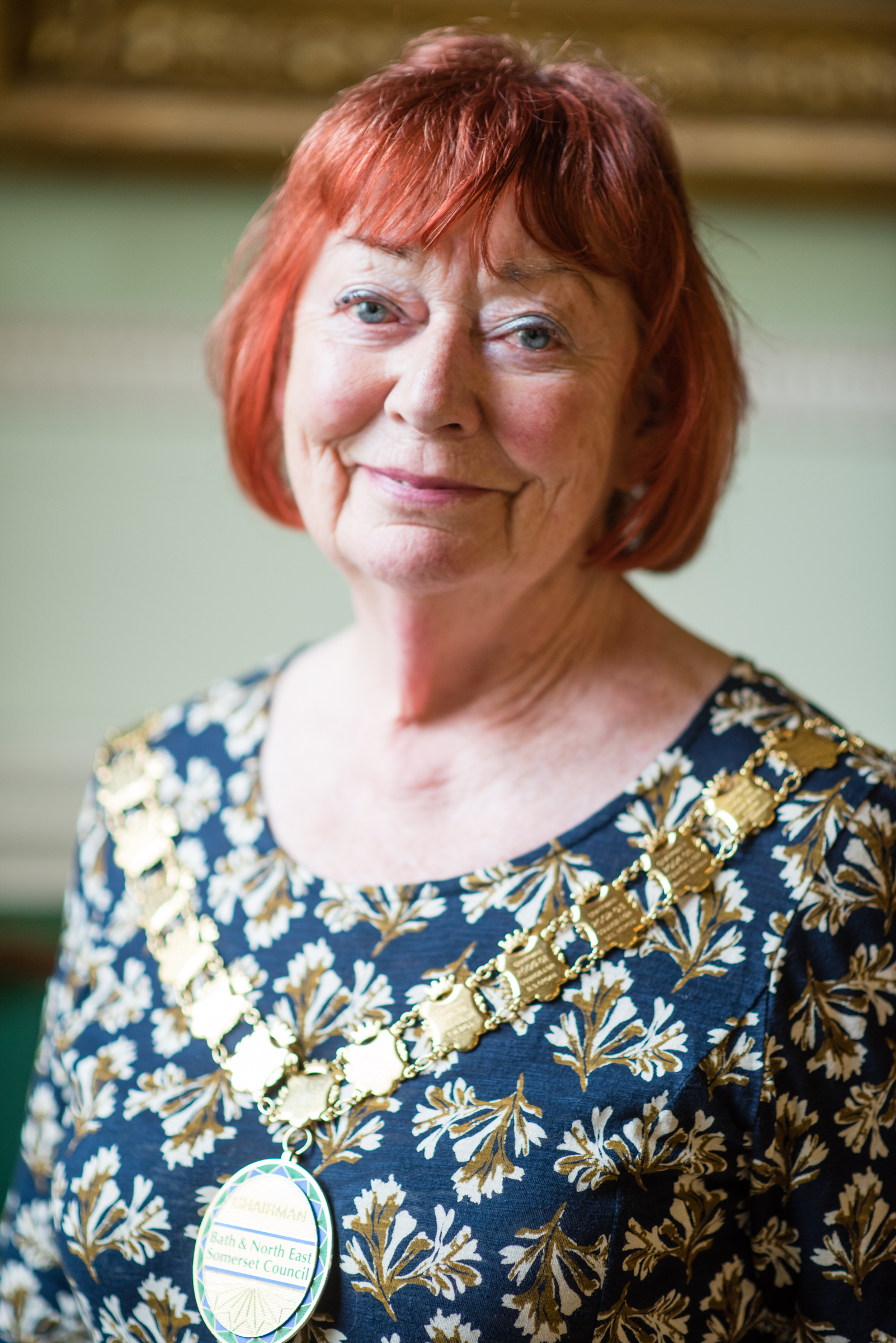
Liz Hardman is the Chair of the Council, and was first elected as a Bath & North East Somerset Labour Councillor for Paulton ward in 2011. She was consequently re-elected in 2015 and 2019.
Before becoming a Councillor, Liz taught in Ireland and France, before returning to the UK to teach in London, Bristol and finally Bath, where she was an assistant headteacher in a comprehensive school for over 10 years.
Liz first became involved in her community when she and the then-Head of Library Services collaborated to move Paulton Library to a more central position. Her dream of having a café with an Internet connection in the Library area was realised after she was elected as a Councillor. Both café and library are flourishing.
Liz was also involved with setting up a group to improve the environment in Paulton. A South West in Bloom group was formed which transformed many areas of the village. The group even won a Southwest in Bloom award in their first year.
Liz is also part of the organising committee for Paulton’s free annual Party in the Park and at the start of the COVID-19 pandemic, Liz and other residents set up - and have continued to run - a free food larder for Paulton’s families in need, supported by the Methodist Church which allows it to be run on its premises, and by Rotary.
Here at B&NES Liz has taken up positions on the Knife Awareness Working Party, which works to stop knife violence, and the Fair Food Alliance Group which is working to combat food poverty. She is the Champion for Children Looked After, and played a key part in developing a motion for Council that made being care experienced a legally protected characteristic, with significant and measurable positive impacts for this group of people. She's also fought for rural buses in her area and after six months of campaigning with her fellow Paulton Parish Councillors, they have developed a new supported bus service, serving a wider area than before, linking Paulton and surrounding villages to the Park and Ride in Bath.
Liz has been a governor at Paulton Infant School for over 10 years and was part of the team when the school received a “Good” Ofsted rating.
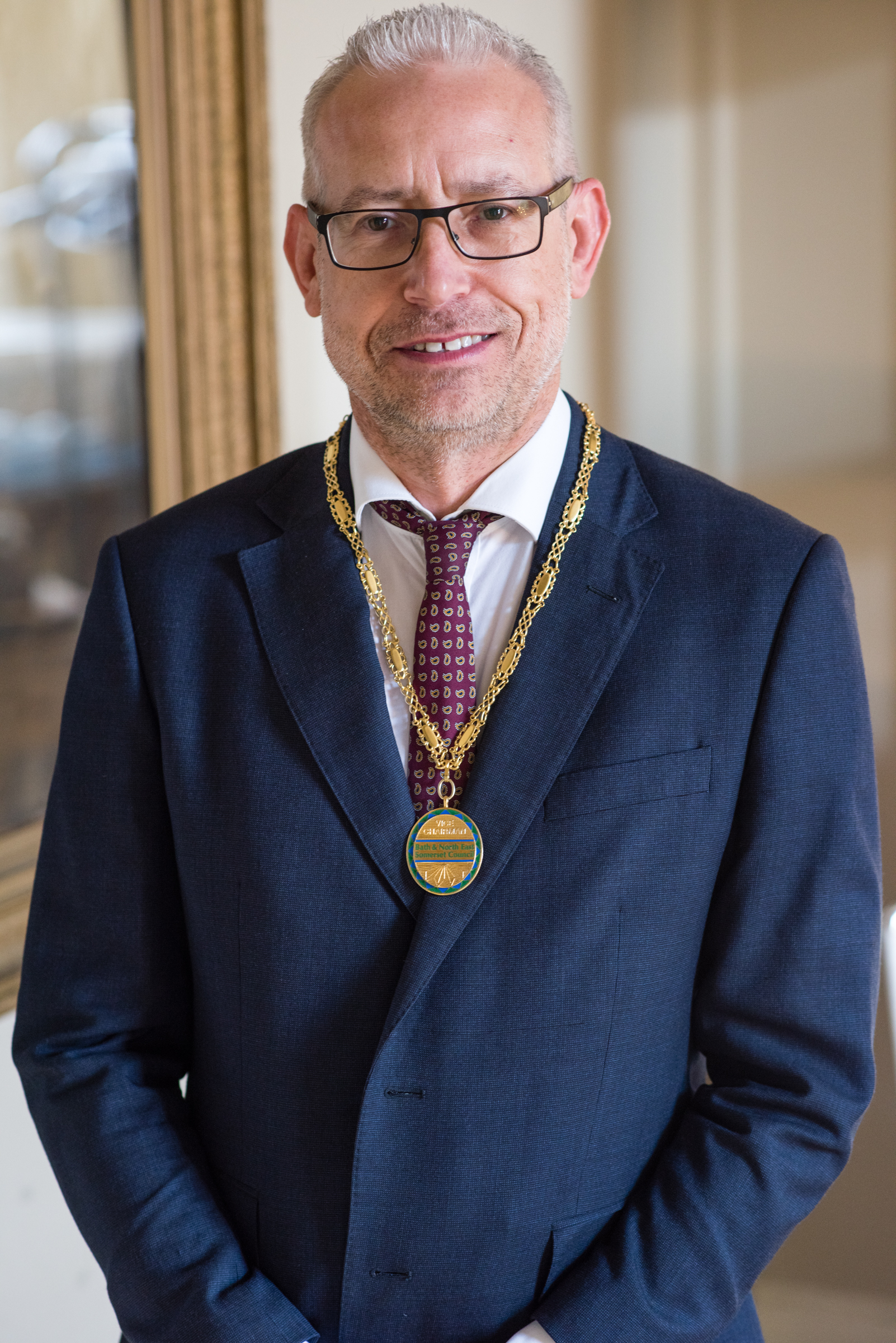
Shaun joined the Liberal Democrats in 1990 and has been a councillor for over twenty years on Bath and North East Somerset Council, and is has been serving the residents of the Parish and Ward of Timsbury since May 2023. Shaun and his husband, Sean, have lived in Timsbury for over ten years, where they are both members of Timsbury Parish Council. Shaun was first elected as a councillor in May 1999, representing Oldfield Park until the last election. Shaun has previously had the honour of serving as the as Chair of the Council in May 2022, having been the Vice-Chair the year before. He has also been the first citizen of Bath, becoming the 783th Mayor of Bath in May 2010. Shaun has also served the city as Deputy Mayor of Bath in 2004, and again in 2015.
For the last six years, Shaun has been the Chair of Avon Pension Fund (APF) Committee Investment Panel and Vice-Chair of APC. He is the B&NES Rep on the Joint Local Access Forum (set up to improving Public Rights of Way), and the Member Advocate: Active Travel (North East Somerset) and for LGBT+ Issues. Shaun is an active volunteer with the Timsbury Group of the Avon and Somerset Constabulary’s Community SpeedWatch.
Shaun’s local government experience includes membership of various committees over the years including the Community, Culture and Leisure Committee, the Resources Overview and Scrutiny Panel, the Schools Organisation Committee, the Bath Area South Local Committee, the Corporate Audit Committee, the Regulatory (Access) Committee, and the Standing Committee of the Charter Trustees of the City of Bath.
In 2002, Shaun established the Council’s Student Liaison Committee, which he chaired for five years until it became the Student Community Partnership (SCP) in 2007. He served as a member of the SCP from its creation until he moved Wards in May 2023. Previously he has served as a member of the University of Bristol Court and as a governor of City of Bath College and Bath Spa University, where he has also been a lay member of the trustee of their Students’ Union. Shaun has also been a trustee of Off the Record and a member of Avon Fire Authority and its appointments committee.
In 2002, Shaun succeeded in his campaign for B&NES to become one of the first local authorities in the Country to establish a Partnership Register for gay and lesbian couples, the forerunner to today’s equal marriage act passed in 2013.
He moved to Bath from Totnes in 1990 to study at what is now Bath Spa University. Following his first degree, Shaun was elected Vice-President of the Students’ Union, and spent two years in elected roles the National Union of Students. Since graduating in 1993, Shaun has spent his career in working in post-16 education, initially at Bath College. In 1999 he moved to the University of Bath, where he has worked in various professional services as well as in the Students’ Union. Shaun is currently the Student Engagement Manager in the Centre for Learning and Teaching.
He grew up in South Devon, attending King Edward VI Community College in Totnes. Shaun spent a few years of his childhood living in Karachi, Pakistan, where his father was working. He was a keen rugby player, and when he graduated from Uni, he joined local side Stothert and Pitt RFC, where he played for over 20 years. Shaun has also played for the Village Spartans RFC, a gay rugby team based in Manchester, for 12 years. Shaun and his husband are both keen fans of Bath Rugby and they have held season ticket sat the Rec for many years. Shaun also enjoys swimming and cycling.
Meet the Lord-Lieutenant and The High Sheriff
Expand the following titles to learn more about our current Lord-Lieutenant and High Sheriff:
His Majesty's Lord-Lieutenant of a county is an Honorary Officer appointed by the King on the advice of the Pirme Minister. They are the permanent representative of the Crown in that county and normally serve until retirement at between 70 and 75 years of age.
Somerset Lieutenancy covers the historic county of Somerset (the areas administered by Bath & North East Somerset, North Somerset, and Somerset County Councils). The total population of this area at the last census was 981,700.
The Lord-Lieutenant of Somerset is Mr Mohammed Saddiq.
HM Lord-Lieutenant of Somerset
Lieutenancy Office
County Hall
Taunton
Somerset
TA1 4DY
The office dates from the reign of Henry VIII, and the Lord-Lieutenant was originally responsible for the maintenance of order and for local defence.
The responsibilities of the Lord Lieutenant include:
- all aspects of visits by members of the Royal Family, and escorting Royal Visitors
- presentation of awards and medals on behalf of The King
- representing The King at a variety of events
- liaison with local units of the Royal Navy, Army and Royal Air Force, and with the reserve forces and cadets
- participation in civic and voluntary activity within the Lieutenancy
- advising on honours nominations
- Chairmanship of the Advisory Committee which recommends the appointment of magistrates to the Lord Chancellor
- on ceremonial occasions, Lord-Lieutenants wear uniform, or a special badge of office.
The Lord-Lieutenant is supported by a Vice Lord-Lieutenant and by Deputy Lieutenants, who they appoint from those people who have rendered particular service to the county in a variety of ways, the number of Deputies depending on the size of the population. There are normally between 30 and 40 Deputy Lieutenants.
High Sheriffs are responsible in the counties of England and Wales for duties conferred by the Crown through warrant from the Privy Council, including:
- attendance at Royal visits to the county
- the well-being and protection of His Majesty's High Court judges when on circuit in the county and attending them in court during legal terms
- acting as the Returning Officer for Parliamentary elections in county constituencies
- responsibilities for the proclamation of the accession of a new sovereign
- the maintenance of the loyalty of subjects to the Crown
- in Somerset, the leading role in Somerset Crimebeat
The High Sheriff of Somerset is Robert Drewitt Esq.
Hill View House
Bishop Sutton
Bristol
Somerset
BS39 5UJ
You can also email robertdrewett@highsheriffsomerset.org.uk
The Office of High Sheriff is at least 1,000 years old, having its roots in Saxon times, before the Norman Conquest. It is the oldest continuous secular office under the Crown. Originally, the office held many of the powers now vested in HM Lord-Lieutenants, High Court judges, magistrates, local authorities, coroners and even the Inland Revenue.
The Office of High Sheriff remained first in precedence in the counties until the reign of Edward VII, when an Order in Council in 1908 gave the Lord-Lieutenants the prime office under the Crown as the sovereign's personal representative. Lord-Lieutenants were created in 1547 for military duties in the shires. The High Sheriff remains the sovereign's representative in the county for all matters relating to the judiciary and the maintenance of law and order.
Nominations for High Sheriff
Nominations to the office of High Sheriff are dealt with through the presiding Judge of the Circuit and the Privy Council, for consideration by the Sovereign in Council. The annual nominations of three prospective High Sheriffs for each county are made in a meeting of the Lords of the Council in the King's Bench Division of the High Court of Justice, presided over by the Lord Chief Justice on 12 November each year. Subsequently, the selection of new High Sheriffs is made annually in a meeting of the Privy Council by the Sovereign, when the custom of 'pricking' the appointee's name with a bodkin is perpetuated.
The Sheriff's year
The High Sheriff takes up appointment upon making a sworn declaration in terms dictated by the Sheriffs Act 1887. The appointment is for one year only, except in the event of something untoward happening to the High Sheriff's expected successor, in which case a High Sheriff must remain in office until a successor is appointed.
High Sheriffs are now encouraged by the Shrievalty Association of England and Wales to undertake duties to improve and sustain the morale of the personnel of voluntary and statutory bodies engaged in the maintenance and extension of law and order, and the entire criminal justice system.
It is an independent, non-political office which enables the holder to bring together a wide variety of individuals and office holders for the good of the community they serve. In recent years, High Sheriffs in many parts of England and Wales have been particularly active in the field of crime reduction and the development of an anti-crime culture, particularly among young people.
The High Sheriff receives no pay or expenses.